Meme coin trading on Solana apps versus manual wallet swaps and which suits beginners better
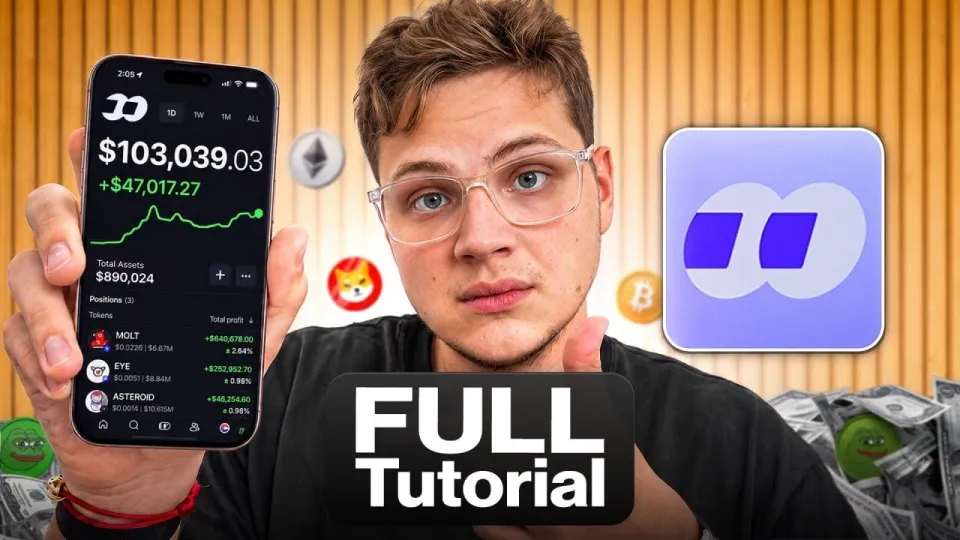
Video: How To Make Money Trading Memecoins (fomo app tutorial)
Want articles like this for your own video to promote it on YouTube and Google? Order them through the Telegram bot @sat_sit_bot. Articles with your video embedded are written and posted by the bot itself — on popular topical sites (no ads). Free trial — 50 articles.
Key takeaways
- Meme coins are high-volatility tokens priced almost entirely by attention, liquidity and holder flow rather than cash flow or earnings.
- Dedicated apps such as fomo (fomo.family/r/orangie) bundle a wallet, chart, buy and sell buttons and social feeds into one interface instead of a full DEX screen.
- Copy trading lags the wallet being copied: large traders often buy on a separate account first, so followers enter at a worse price.
- Fees stack up on Solana meme coins: network fee, DEX or aggregator fee, platform fee and priority fee, plus slippage on thin pools.
- A workable beginner rule is to risk a fixed small slice of the wallet per trade and take partial profit on the way up instead of waiting for a 100x.
A meme coin is a cryptocurrency whose price is driven by attention, liquidity and holder flow rather than revenue or earnings, and the practical choice for most beginners is a dedicated trading app like fomo over manual swaps in a raw wallet, because the app removes the setup steps where newcomers lose money. The fomo platform, reachable through the referral link for registration and the trading interface, combines a wallet, chart, buy and sell buttons and a social feed in one screen. Orangie Web3 walks through exactly that flow in a tutorial on the channel, and the questions under it show where beginners actually get stuck: fees, copy trading, alerts and position sizing.
What a meme coin actually is and why it moves so fast
A meme coin is a token with no product behind it, so its price is set by whatever the next buyer is willing to pay, which makes liquidity and narrative the only real fundamentals. On Solana, launching a token costs a few dollars and takes minutes, so thousands appear every week and most go to zero. The ones that survive share a pattern: a clear meme, a fair launch with no hidden insider allocation, growing holder count and enough liquidity that a normal sell order does not crater the chart.
That structure explains the speed. When a token has a market cap of a few hundred thousand dollars and a shallow pool, a purchase of a few thousand dollars can move the price tens of percent, and the same works in reverse on the way out. Traders who make money in this niche are not predicting the future; they are managing entries, exits and size around a market that is mostly noise.
App-based trading versus manual swaps on a DEX
An app-based route wins for beginners because it collapses wallet creation, funding, token search, chart reading and execution into one guided sequence, while a manual DEX swap gives more control but more places to make a costly mistake. In a raw setup you need a wallet extension or mobile app, a seed phrase stored safely, SOL for gas, a connection to the right DEX or aggregator, the correct token contract address, and manual slippage settings. Each of those is a step where a wrong paste or a fake token can drain funds.
A platform like fomo handles the plumbing: you log in, deposit SOL, search a ticker, see a chart and a feed of what other users are trading, and press buy. The trade-off is real. You depend on the platform's routing, its fee and its custody model, and you get fewer advanced order types than a professional terminal. The right answer depends on how much of the process you want to own.
- Choose the app route if you are new, trading small amounts, and want speed over granular control.
- Choose a manual wallet plus DEX if you need custom slippage, limit-style execution through bots, or self-custody of every key.
- Never split attention between the two on the same trade, because two interfaces mean two sets of fees and two chances to fat-finger a size.
The real cost stack on every meme coin trade
Every meme coin trade carries at least four cost layers, and on small positions those layers can eat most of the upside. On Solana the network fee itself is trivial, often a fraction of a cent, but the priority fee added to land the transaction during congestion can be many times larger. The DEX or aggregator takes its own cut, the trading app may add a platform fee, and slippage does the rest: if you buy a thin pool with high slippage tolerance, you can fill several percent above the quoted price before the chart even updates.
Run the math before sizing. A trade that gains 20% but pays 2% in platform fees, 1% in slippage on entry and another 1% on exit leaves far less than it looks. This is why experienced traders concentrate on tokens with deeper liquidity and avoid chasing moves that require maximum slippage to enter. It is also why the most requested feature in the comments under the tutorial is price alerts: catching a move early is worth more than any fee optimisation.
Why copy trading usually arrives too late
The most common way beginners lose money in meme coins is copying a large trader's buy after it is already visible, because the visible entry is often the exit liquidity for an earlier purchase on a separate wallet. A trader who wants to build a position can buy quietly on one account, then buy again on a public, followed wallet to trigger notifications and follower demand, then sell the first position into that demand. Followers see a green candle and a leaderboard entry; they do not see the earlier fill.
That does not make social feeds useless. They are useful as a signal of where attention is moving, not as an execution instruction. Use them to build a watchlist, then check liquidity, holder distribution and how far the token has already run before committing anything. If a coin is up several hundred percent and the feed is full of entries, the risk-reward has already inverted.
A beginner routine that survives volatility
A survivable meme coin routine is built on fixed risk per trade and pre-planned exits rather than conviction about any single token. Concretely:
- Fund a separate wallet with an amount you are willing to lose entirely, not with rent money or savings.
- Cap each position at a small fixed percentage of that wallet, for example 2–5%, so a total loss on one token does not end the experiment.
- Check liquidity and holder concentration before buying; a token where a handful of wallets hold most of the supply is a trap regardless of the meme.
- Set a mental or literal exit plan before entry: sell part of the position on the first strong move and let the rest run.
- Log every trade with entry, exit, fees and the reason for the decision, because patterns only become visible in a written record.
One commenter described reloading a drained wallet with about $90, making roughly $30 one day and giving much of it back the next, which is the typical shape of early results. The lesson is not that the market is rigged; it is that position size and record-keeping decide who is still trading after a month.
Common beginner questions answered
Beginners mostly ask about safety, fees and whether the whole thing is a scam, and the honest answer is that the category contains both fraud and genuine opportunity and the tools only change your odds at the margin. A trading app reduces operational mistakes but cannot make a bad token good. A meme coin with no liquidity, a single wallet holding half the supply and a chart that went vertical in ten minutes is a bad token whichever button you press.
Safety comes from process: verify the contract address from a source you trust, start with small amounts, withdraw profits rather than compounding everything, and treat any promise of guaranteed returns as a red flag. The same applies to links. Use the platform address you intended to visit, not one sent in a direct message.
Useful links
- fomo trading platform, registration and interface: https://fomo.family/r/orangie
- Orangie Web3 Discord community: https://discord.gg/memecoins
- Orangie on Instagram: https://www.instagram.com/orangieyt/
Final takeaway
Meme coin trading is a high-variance activity where the edge comes from execution discipline, cost awareness and position sizing rather than from picking the next 100x. An app-based flow lowers the operational error rate for newcomers, manual swaps give control to experienced traders, and copy trading is a signal source rather than a strategy. Start small, count the fees, plan the exit before the entry, and treat every loss as tuition with a written record. The walkthrough on the Orangie Web3 channel is a useful starting point for the app mechanics, and the fomo registration link is where that flow begins.
Questions & answers
Is trading meme coins on an app safer than swapping manually in a wallet?
It is safer against operational mistakes, not against market risk. An app removes wrong contract pastes, missing gas and broken slippage settings, but it cannot protect you from a token with no liquidity or a concentrated holder base. Manual swaps give more control and full self-custody, which suits traders who already know the steps.
How much does a meme coin trade actually cost?
Expect four layers: the Solana network fee, a priority fee for faster inclusion, a DEX or aggregator fee and possibly a platform fee, plus slippage on entry and exit. On small positions the combined drag can easily exceed several percent, so calculate it before sizing a trade.
Why do copied trades often lose money?
Because the wallet being copied usually bought earlier on a separate account and uses the public buy to attract followers. By the time a notification arrives, the price has already moved and followers provide the exit liquidity. Social feeds are better used to spot attention than to trigger entries.
What is a reasonable starting amount for a beginner?
Only an amount you can lose completely without changing your finances, and then a small fraction of that per position. Many traders cap single positions at 2–5% of the trading wallet so a string of losses does not end the experiment before the learning does.
Source: How To Make Money Trading Memecoins (fomo app tutorial) · Markdown version